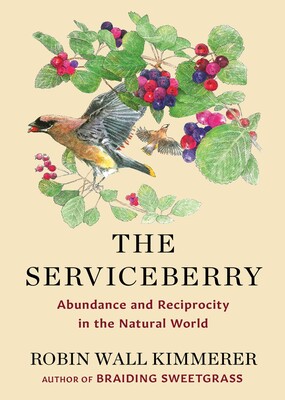

durian reviewed The Serviceberry by Robin Wall Kimmerer
Such a wonderful and inspiring book
5 stars
Loved this book! It's inspiring, and I resonate a lot with the writing. Very timely too now that juneberries are ripening. The book helped me have a better understanding of these trees, their history with indigenous peoples, and their role in the ecosystem.
I feel connected to the trees more and I find myself connecting with my neighbors too. Some who don't know about the serviceberry see me picking them and they ask me all about these berries. Some who are very familiar with them talked to me about the cedar waxwings that absolutely love these berries.
Only thing I don't agree is I think there's a part that says, "we need to elect leaders who believe in [protecting Nature]" but I think from an anarchist's lens the people at the top are the ones who are most likely to destroy nature because of the power they hold.
Loved this book! It's inspiring, and I resonate a lot with the writing. Very timely too now that juneberries are ripening. The book helped me have a better understanding of these trees, their history with indigenous peoples, and their role in the ecosystem.
I feel connected to the trees more and I find myself connecting with my neighbors too. Some who don't know about the serviceberry see me picking them and they ask me all about these berries. Some who are very familiar with them talked to me about the cedar waxwings that absolutely love these berries.
Only thing I don't agree is I think there's a part that says, "we need to elect leaders who believe in [protecting Nature]" but I think from an anarchist's lens the people at the top are the ones who are most likely to destroy nature because of the power they hold.
