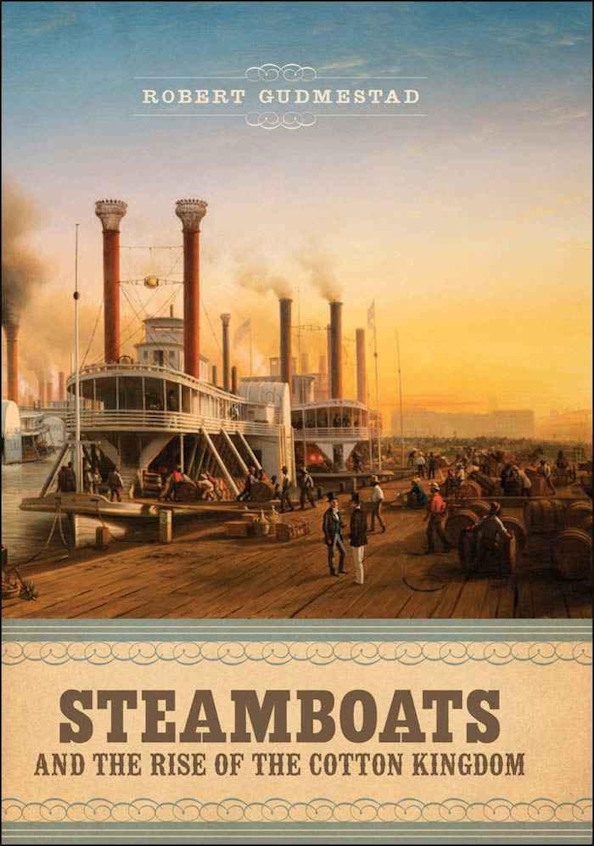

Steamboats and the Rise of the Cotton Kingdom

304 pages

Published Oct. 24, 2011 by LSU Press.

ISBN:
978-0-8071-3842-7
Copied ISBN!

View on Inventaire

The arrival of the first steamboat, The New Orleans, in early 1812 touched off an economic revolution in the South. In states west of the Appalachian Mountains, the operation of steamboats quickly grew into a booming business that would lead to new cultural practices and a stronger sectional identity. In Steamboats and the Rise of the Cotton Kingdom, Robert Gudmestad examines the wide-ranging influence of steamboats on the southern economy. From carrying cash crops to market to contributing to slave productivity, increasing the flexibility of labor, and connecting southerners to overlapping orbits of regional, national, and international markets, steamboats not only benefited slaveholders and northern industries but also affected cotton production. This technology literally put people into motion, and travelers developed an array of unique cultural practices, from gambling to boat races. Gudmestad also asserts that the intersection of these riverboats and the environment reveals much about sectional identity in …

2 editions

An Intriguing Technological History

This book details the transformative nature of the steamboat in US history, particularly its dominance in transportation and commerce in the antebellum decades until it was supplanted by the railroad. Issues around technological safety (or lack thereof) and post-hoc attempts to deal with these problems were instructive, as was the economic analyses vis-a-vis railroads. I wish there were more on the underlying technological developments, and I think the usage of steamboats for Indian removal was not nearly critical enough. Overall, as a history of a commonly forgotten but critical technology in its time, this is a worthwhile read for anyone interested in US, transportation, or technology history. Highly recommend

avatar for bwaber@bookwyrm.social

rated it