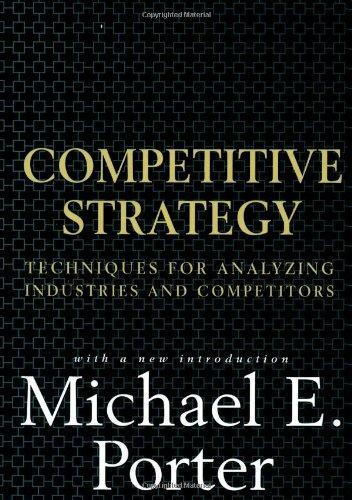

Ben Waber reviewed Competitive Strategy by Michael Porter
A Book-Length HBR Article
4 stars
That most of the insights in this book will strike the modern reader as common sense is a testament to the influence it's had, but also its limitations. A third of the book can mostly be summed up with the phrase: "engage in collusion," while much of the rest of the book should come with a giant "citation needed" label. The problem with the frameworks Porter provides isn't that they're overly general or not prescriptive - a single book attempting to cover strategy in all circumstances will necessarily have to be. Rather, the question is whether or not his frameworks are predictive when employed. Certainly in terms of post-hoc analysis they're convincing, but of course the real question is does this approach actually lead to strategic insights that are more predictive of the future than more ad hoc methods. Nothing here suggests that's the case. That doesn't mean that some …
That most of the insights in this book will strike the modern reader as common sense is a testament to the influence it's had, but also its limitations. A third of the book can mostly be summed up with the phrase: "engage in collusion," while much of the rest of the book should come with a giant "citation needed" label. The problem with the frameworks Porter provides isn't that they're overly general or not prescriptive - a single book attempting to cover strategy in all circumstances will necessarily have to be. Rather, the question is whether or not his frameworks are predictive when employed. Certainly in terms of post-hoc analysis they're convincing, but of course the real question is does this approach actually lead to strategic insights that are more predictive of the future than more ad hoc methods. Nothing here suggests that's the case. That doesn't mean that some of the suggestions here aren't helpful, but beyond these general pointers, which probably should fit in a single article, there's a stunning lack of validation.