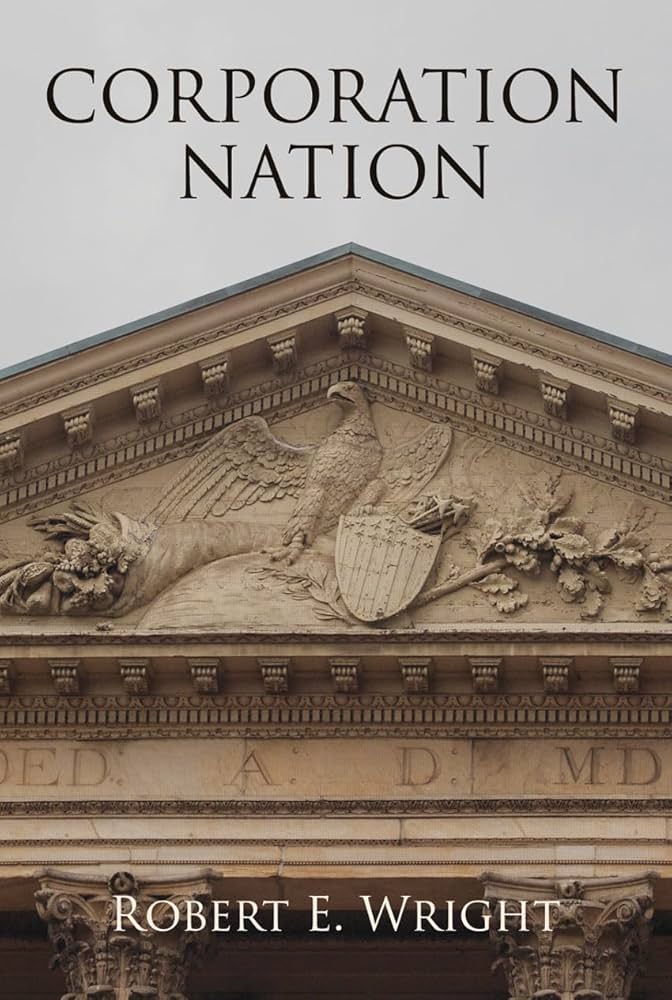

Ben Waber reviewed Corporation Nation by Robert E. Wright
A Fantastic History with Forgettable Modern Analyses
5 stars
This is an incredible review of the early history of corporations in the US - from their jaw-dropping start funding operations through lotteries instead of selling shares, to the still wild and highly speculative early to mid 19th century, to the lead up to the Great Depression. There is a bit of coverage after that but it is definitely not the book's strong suit, nor is the armchair legal and economic analysis that accompanies it. The extreme libertarian views of the author shows through in cracks, which is extremely off putting but not too distracting. The main thrust of the book, however, is excellent, showing how fraud pervaded the private sector and the breadth of experimentation with corporate governance during this period. That experimentation is clearly needed again today, but geared towards much more oversight, rather than the regression to the pre-SEC days that will surely teach us the lessons …
This is an incredible review of the early history of corporations in the US - from their jaw-dropping start funding operations through lotteries instead of selling shares, to the still wild and highly speculative early to mid 19th century, to the lead up to the Great Depression. There is a bit of coverage after that but it is definitely not the book's strong suit, nor is the armchair legal and economic analysis that accompanies it. The extreme libertarian views of the author shows through in cracks, which is extremely off putting but not too distracting. The main thrust of the book, however, is excellent, showing how fraud pervaded the private sector and the breadth of experimentation with corporate governance during this period. That experimentation is clearly needed again today, but geared towards much more oversight, rather than the regression to the pre-SEC days that will surely teach us the lessons of lax governance all over again. Highly recommend