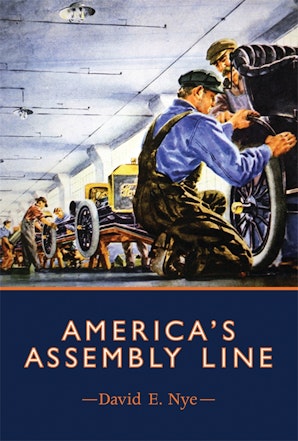

America's Assembly Line

Published Feb. 15, 2013 by MIT Press.

ISBN:
978-0-262-31292-9
Copied ISBN!

The mechanized assembly line was invented in 1913 and has been in continuous operation ever since. It is the most familiar form of mass production. Both praised as a boon to workers and condemned for exploiting them, it has been celebrated and satirized. (We can still picture Chaplin's little tramp trying to keep up with a factory conveyor belt.) In America's Assembly Line, David Nye examines the industrial innovation that made the United States productive and wealthy in the twentieth century.

The assembly line—developed at the Ford Motor Company in 1913 for the mass production of Model Ts—first created and then served an expanding mass market. It also transformed industrial labor. By 1980, Japan had reinvented the assembly line as a system of “lean manufacturing”; American industry reluctantly adopted the new approach. Nye describes this evolution and the new global landscape of increasingly automated factories, with fewer industrial jobs …

3 editions

An Insightful Review of the Assembly Line's Long History in the US

Nye traces the history, refinement, and diffusion of the assembly line process through the decades, demonstrating its tremendous power in driving (see what I did there?) mass market production and consumption. The sections that covered the diffusion of the optimized process conceived at Ford through work site visits by European executives was instructive, as was the similar ingestion of more effective Japanese processes later in the century. The specter of automation taking jobs is continually raised throughout the decades, essentially never coming to pass (most displacement was due to outsourcing), which hopefully people today consider when they make proclamations about the potential displacement effects of new technologies. Highly recommend

avatar for bwaber@bookwyrm.social

rated it