"We are, all of us, everywhere, always, enmeshed in a web of rules and constraints. Rules fix the beginning and end of the working day and the school year, direct the ebb and flow of traffic on the roads, dictate who can be married to whom and how, place the fork to the right or the left of the plate, lay down the meter and rhyme scheme of a Petrarchan sonnet, and order the rites of birth and death. Cultures notoriously differ as to the content of their rules, but there is no culture without rules. In this book, historian of science Lorraine Daston adopts a long term perspective for studying rules from diverse sources, including monastic orders, cookbooks, and mathematical algorithms. She argues that in the Western tradition most rules can be characterized as one of the following: tools of measurement and calculation, models or paradigms, or laws. Moreover, …
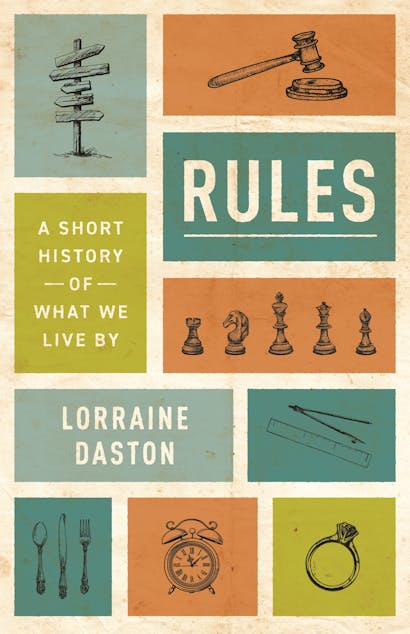
"We are, all of us, everywhere, always, enmeshed in a web of rules and constraints. Rules fix the beginning and end of the working day and the school year, direct the ebb and flow of traffic on the roads, dictate who can be married to whom and how, place the fork to the right or the left of the plate, lay down the meter and rhyme scheme of a Petrarchan sonnet, and order the rites of birth and death. Cultures notoriously differ as to the content of their rules, but there is no culture without rules. In this book, historian of science Lorraine Daston adopts a long term perspective for studying rules from diverse sources, including monastic orders, cookbooks, and mathematical algorithms. She argues that in the Western tradition most rules can be characterized as one of the following: tools of measurement and calculation, models or paradigms, or laws. Moreover, they exist on spectra from specific to general, flexible to rigid and the specific-to-general, and universal-to-particular. In investigating how rules work, how they don't work, how they've changed across time, and why exceptions are necessary, Daston paints a vivid picture of Western civilization from the antiquity to the present"--
Very interesting details of history of rules and laws, and cured me of the idea that a rule or method is better if it can be applied without judgment and without exceptions.
The middle third of this book is amazing, focusing on the history of algorithms (chapter 4), calculation (chapter 5), and rules and regulations in the age of urban expansion (chapter 6). Daston makes clear how the understanding of what constituted an algorithm, and how much background knowledge one has to bring to the table, changed dramatically over the centuries, as well as how the introduction of calculating machines didn't immediately lead to higher performance without extensive organizational and process reworking. The rest of the book is somewhat hit and miss
The middle third of this book is amazing, focusing on the history of algorithms (chapter 4), calculation (chapter 5), and rules and regulations in the age of urban expansion (chapter 6). Daston makes clear how the understanding of what constituted an algorithm, and how much background knowledge one has to bring to the table, changed dramatically over the centuries, as well as how the introduction of calculating machines didn't immediately lead to higher performance without extensive organizational and process reworking. The rest of the book is somewhat hit and miss