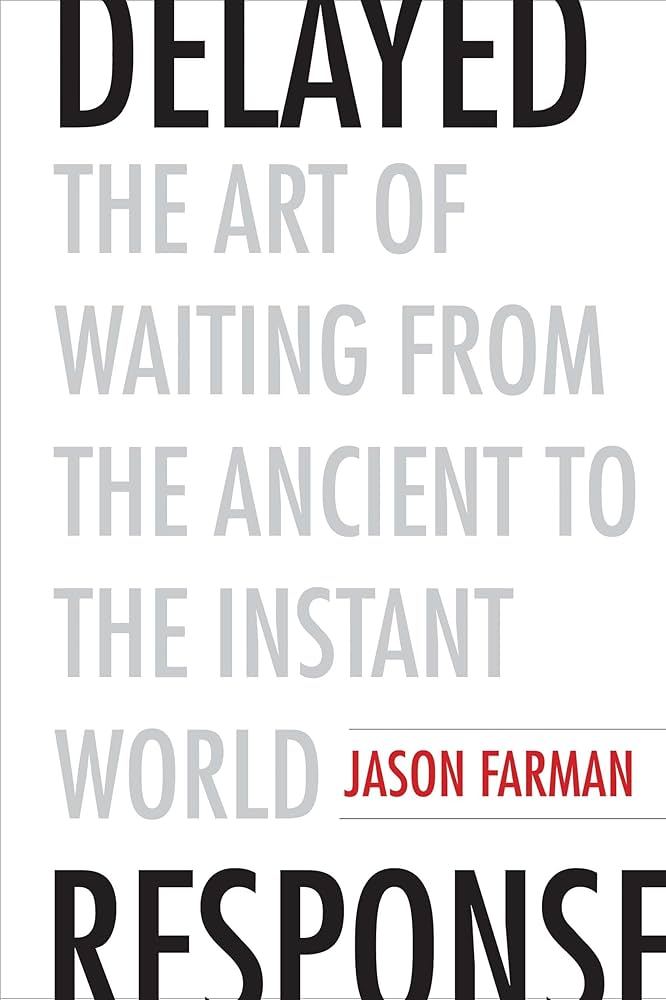

Jim Brown reviewed Delayed Response by Jason Farman
Probably about five years ahead of its time
I'm always interested in reading books about tech from the "near" past. This book, published in 2017, was probably ahead of its time. Addressing the idea of "waiting" in an attention economy that captures every moment is, of course, really necessary. The interesting thing about this book is the historical and cultural reach. Farman does deep historical, archival stuff about the use of seals on letters and with Civil War soldiers writing home, and he also travels around the world.
It is a quick read that is good for both academic and general audiences.
"The delay between sending and receiving a message is something people have always interpreted with anxiety, hope, fear, boredom, or longing. These interpretations are powerful tools for shaping the ways that we understand human connection and intimacy. These interpretations also help unlock innovation, as we speculate about the unknown and create new ways of …
I'm always interested in reading books about tech from the "near" past. This book, published in 2017, was probably ahead of its time. Addressing the idea of "waiting" in an attention economy that captures every moment is, of course, really necessary. The interesting thing about this book is the historical and cultural reach. Farman does deep historical, archival stuff about the use of seals on letters and with Civil War soldiers writing home, and he also travels around the world.
It is a quick read that is good for both academic and general audiences.
"The delay between sending and receiving a message is something people have always interpreted with anxiety, hope, fear, boredom, or longing. These interpretations are powerful tools for shaping the ways that we understand human connection and intimacy. These interpretations also help unlock innovation, as we speculate about the unknown and create new ways of exploring the universe." (1)