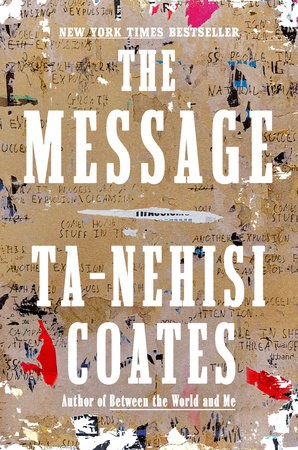

Fionnáin reviewed The Message by Ta-Nehisi Coates
Perfect Revisionism
5 stars
An academic friend of mine once said that only the best writers admit they were wrong and revise their past work. This book is, at its heart, a revision and an awakening in a writer who was already a wonderful and careful essayist. Ta-Nehisi Coates has beautiful prose, giving voice to Black and other marginalised people, influenced by his own US (Baltimore) lived perspective. His writing plays with ideas, a type of artistic journalism that unravels myth and connects disparate parts.
The Message comes in three sections: First, a visit to Dakar in Senegal, where he unpacks some of his ancestral baggage. Second, a trip to South Carolina where he tries to help a schoolteacher stop a ban on his and other Black authors' books. And third, a trip to Palestine, where he witnesses the apartheid system there and then revises his essay over a decade old, 'The Case …
An academic friend of mine once said that only the best writers admit they were wrong and revise their past work. This book is, at its heart, a revision and an awakening in a writer who was already a wonderful and careful essayist. Ta-Nehisi Coates has beautiful prose, giving voice to Black and other marginalised people, influenced by his own US (Baltimore) lived perspective. His writing plays with ideas, a type of artistic journalism that unravels myth and connects disparate parts.
The Message comes in three sections: First, a visit to Dakar in Senegal, where he unpacks some of his ancestral baggage. Second, a trip to South Carolina where he tries to help a schoolteacher stop a ban on his and other Black authors' books. And third, a trip to Palestine, where he witnesses the apartheid system there and then revises his essay over a decade old, 'The Case for Reparations'. Each section grows on the last, reasoning why he has come to a new awakening in his own writing and why he feels it is time to revise his past perspective. It is personal and political, macro and micro.
I had some issues with 'The Case For Reparations' when I first read it a decade ago, but I also loved how it introduced me to a radical idea I had never conceived: the idea of paying back slave families the debt that was accrued through their labour. But Coates rightly highlights that this is colonial logic solving a colonial problem. Using these essay/lectures, and particularly leaning on his witness accounts of Israel and Palestine, he brilliantly revises this. Tremendous writing.