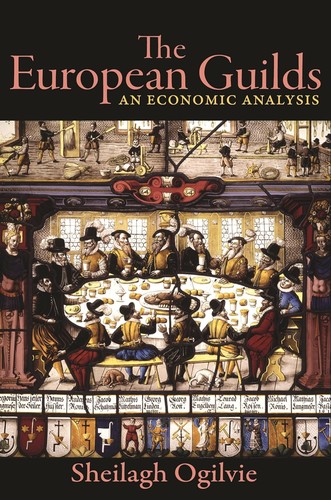

Ben Waber reviewed European Guilds by Sheilagh Ogilvie (Princeton economic history of the Western world)
A Fabulous, Data-Driven Volume
5 stars
This is the definitive book on European guilds, assembling and analyzing an incredible amount of quantitative, qualitative, and historical data sources to methodically analyze European guilds from pretty much every perspective you can imagine. Ogilvie also subjects positive claims about the effects of guilds in each chapter to absolutely withering, methodical analysis to convincingly demonstrate that these institutions were pretty bad for society, with nearly no redeeming qualities. Understanding the link between guilds and tax collection was instructive, as was the baroque nature of their regulations on the field. Given how important this organization of work was for centuries it's still extremely important to understand, as dismantling this system was arguably a pre-requisite for industrialization and more broad based economic growth. Highly recommend
This is the definitive book on European guilds, assembling and analyzing an incredible amount of quantitative, qualitative, and historical data sources to methodically analyze European guilds from pretty much every perspective you can imagine. Ogilvie also subjects positive claims about the effects of guilds in each chapter to absolutely withering, methodical analysis to convincingly demonstrate that these institutions were pretty bad for society, with nearly no redeeming qualities. Understanding the link between guilds and tax collection was instructive, as was the baroque nature of their regulations on the field. Given how important this organization of work was for centuries it's still extremely important to understand, as dismantling this system was arguably a pre-requisite for industrialization and more broad based economic growth. Highly recommend