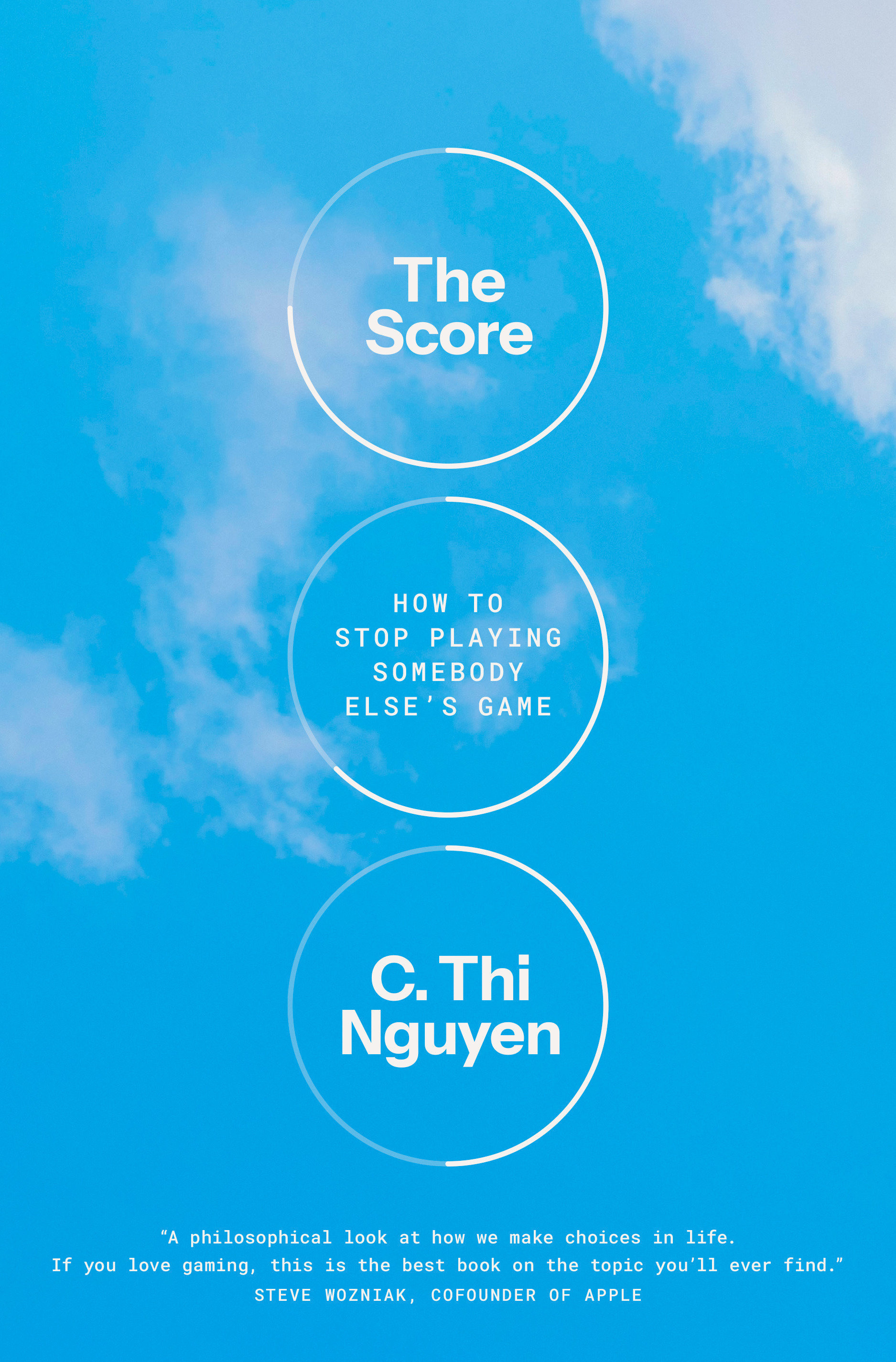

Justin Pickard reviewed The Score by C. Thi Nguyen
Keeping score
4 stars
Not the imagined mass-market reader, but I found this an interesting (if winding) through-line, clearly set out, by a likeable writer. Diagnosis stronger than the prescription; particularly good on the trade-offs between trust and transparency, and the more speculative later material on infrastructures of art and play. Might have benefited from more on valuation, and how different values get produced? The two endings worked for me, but others might see the juxtaposition of the cynical and hopeful readings as a failure of nerve. Lots on recipes, yoga, and the pleasures of yoyoing, all from a first-person perspective, which I didn't expect, going in.
Not the imagined mass-market reader, but I found this an interesting (if winding) through-line, clearly set out, by a likeable writer. Diagnosis stronger than the prescription; particularly good on the trade-offs between trust and transparency, and the more speculative later material on infrastructures of art and play. Might have benefited from more on valuation, and how different values get produced? The two endings worked for me, but others might see the juxtaposition of the cynical and hopeful readings as a failure of nerve. Lots on recipes, yoga, and the pleasures of yoyoing, all from a first-person perspective, which I didn't expect, going in.